Osteopathy as Manual Therapy: Which Supplementary Insurance Covers the Sessions?
Osteopathy treatments are not paid by basic insurance in Switzerland. Compando provides information about the cost coverage of supplementary insurance, the recognised hourly rate and what to note for sports injuries, infants and during pregnancy.
1. How does osteopathy work as manual therapy?
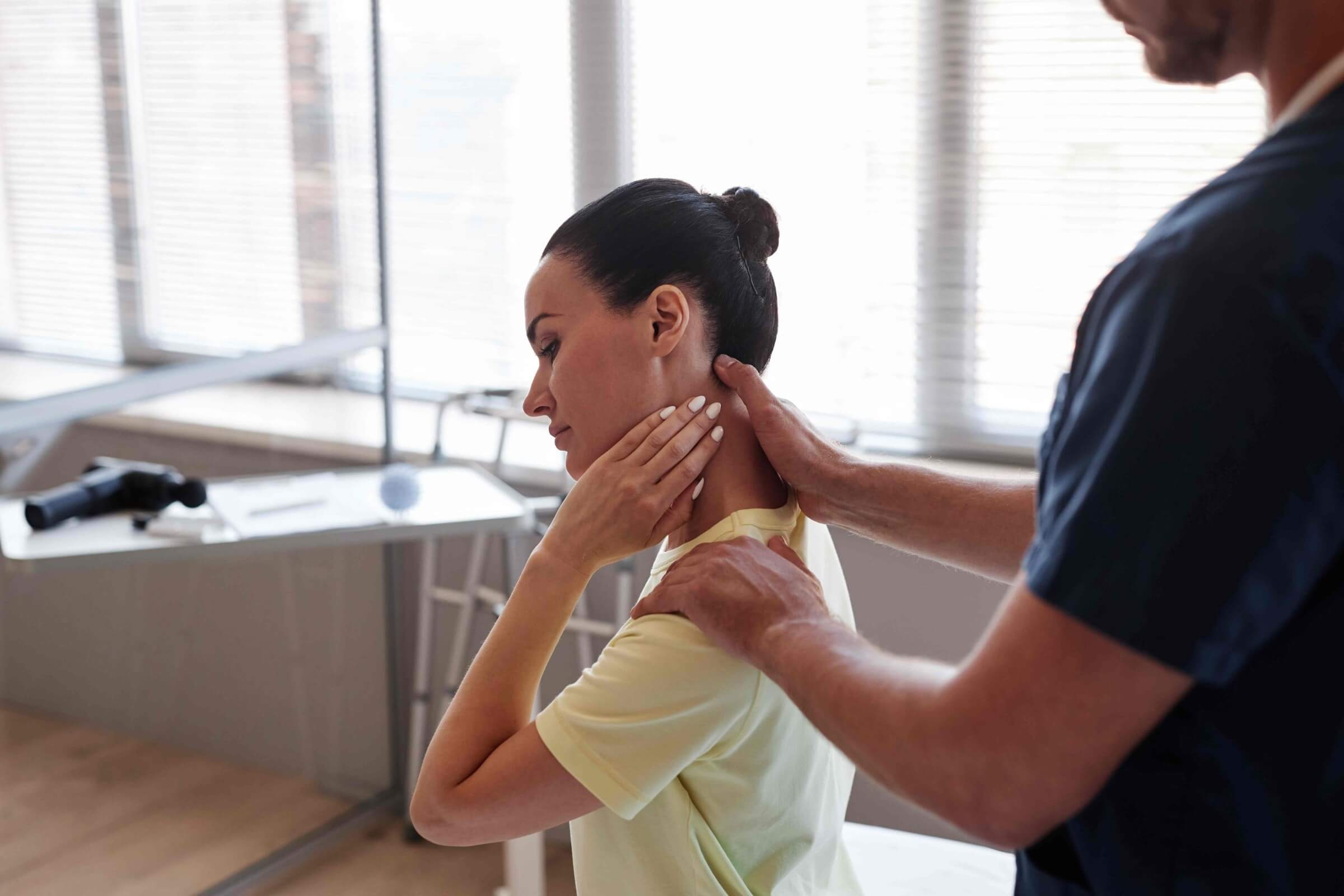
Osteopathy is a holistic manual therapy that is performed exclusively with the hands. Osteopaths view the body as a connected system of skeleton, joints, organs, tissue and nervous system. The goal of the treatment is to release movement restrictions, reduce tensions and support bodily functions. Osteopathy belongs to the methods of alternative and complementary medicine in Switzerland.
Frequent areas of application are:
- Musculoskeletal system: back and neck pain, joint complaints
- Headaches, migraine and tinnitus
- Digestive complaints and functional gastrointestinal problems
- Sports injuries and rehabilitation
- Babies and children: colic, asymmetries, sleep problems
- Pregnancy complaints and pelvic problems
2. Does the insurer cover osteopathy treatments?
Osteopathy does not count among the five alternative medicine methods that the OKP catalogue under Art. 25a KVG recognises. Even with medical prescription, basic insurance does not cover treatment. Unlike with physiotherapy, the cost coverage runs exclusively via outpatient supplementary insurance under the Insurance Contract Act (VVG).
Professional profile of osteopathy in Switzerland
The profession has been regulated since 2007 by the Swiss Conference of Cantonal Health Directors (GDK). Since 2014, the federal Master's diploma is mandatory. The university studies are completed by aspiring osteopaths at the University of Health Sciences Fribourg. The professional association is the Swiss Osteopathy Federation (FSO-SVO, in German).
3. Which supplementary insurance covers manual osteopathy therapy?
Manual osteopathy treatments are covered via an outpatient supplementary insurance with complementary medicine coverage. The insurer covers between 70 and 90 percent of the recognised hourly rate. Covered are treatments for back and joint complaints, for digestive complaints as well as gentle sessions for infants.
Prerequisite is the registration of the osteopath in the EMR or ASCA register. EMR stands for Empirical Medicine Register, ASCA for the Swiss Foundation for Complementary Medicine. The status you can check at emr.ch and asca.ch. Anyone who combines osteopathy with acupuncture, craniosacral therapy or medical massages notes the joint annual limit between CHF 1'000 and CHF 5'000 for all methods together.
Compare osteopathy tariffs for hourly rate and limit
The coverage for osteopathy differs strongly between insurers. Compare before signing not only the premiums, but also cost coverage per hour and annual limit for all methods together.
4. How much does an osteopathy session cost?
An osteopathy treatment lasts between 45 and 90 minutes. The costs differ by type of treatment and region:
- Initial consultation and treatment: CHF 150 to 200 (60 to 90 minutes)
- Follow-up treatment: CHF 120 to 180 (45 to 60 minutes)
- Baby treatment: CHF 100 to 150 (shorter and gentler)
The number of sessions differs by complaints. Chronic back or neck pain usually needs 8 to 12 sessions with annual costs of CHF 1'000 to 2'200. An acute sports injury is usually treated after 4 to 6 sessions (CHF 500 to 1'080). For infants, 3 to 5 appointments usually suffice (CHF 300 to 750).
How the cost coverage works
The insurer does not cover the full practice tariff, but up to a fixed hourly rate. Example: a session costs CHF 180. The insurer covers up to CHF 130 per hour. With 80 percent coverage, that is CHF 104. Your own share of CHF 76 is composed of CHF 50 tariff difference and CHF 26 for the 20 percent without coverage.
5. What to note when taking out an osteopathy supplementary insurance?
An osteopathy supplementary insurance pays off particularly for active adults with chronic back or neck complaints, for athletes in the regeneration phase after injuries as well as for young families with infants who plan cranial osteopathy for crying restlessness or asymmetries. Also pregnant women with pelvic complaints save several hundred francs per year with a tariff with a high hourly rate.
Check before signing:
Check register entry of the osteopath before the first session. Neither the federal Master's diploma nor the FSO-SVO membership alone suffices for the cost coverage. Decisive is the active EMR or ASCA entry. With a practice change, you can have the status confirmed with a short inquiry.
Calculate practice tariff against recognised hourly rate. Insurers cover between CHF 120 and 150 per hour. If the practice tariff is higher (often CHF 180 to 200), you bear the difference yourself. Ask before the first session about the tariff. In the health insurance comparison, you find a provider with high cost coverage per hour.
Clarify waiting periods for osteopathy in pregnancy. Sessions during pregnancy fall under maternity benefits. Some providers require waiting periods of 9 to 12 months. For general osteopathy treatments, 3 to 6 months are typical.
Truthful information on health. At application, a health questionnaire takes place. Correct information under Art. 6 VVG is particularly important for existing back problems. This way you avoid later benefit cuts.
Adapt osteopathy coverage to your needs
Athletes, parents with babies and patients with chronic pain have different requirements for the treatment. Because premiums and annual limits differ, a comparison pays off.
You might also be interested in

Alternative and Complementary Medicine: What Does the Insurer Pay?
16.02.2026
Medical Massages: Which Supplementary Insurance Pays Lymphatic Drainage, Sports Massage and Classical Massage?
16.02.2026
Craniosacral Therapy for Babies and Adults: Which Supplementary Insurance Covers the Sessions?
16.02.2026
Acupuncture and Insurer: When Does the Insurance Pay TCM Treatments?
16.02.2026