Craniosacral Therapy for Babies and Adults: Which Supplementary Insurance Covers the Sessions?
Gentle touches on the skull and sacrum alleviate stress, migraine and complaints in infants. Craniosacral therapy is only covered via supplementary insurance in Switzerland. Compando shows the session costs and clarifies when a family tariff for babies and adults pays off.
- 1
- 2
- 3
- 4
- 5
1. How does craniosacral therapy work and when does it help?
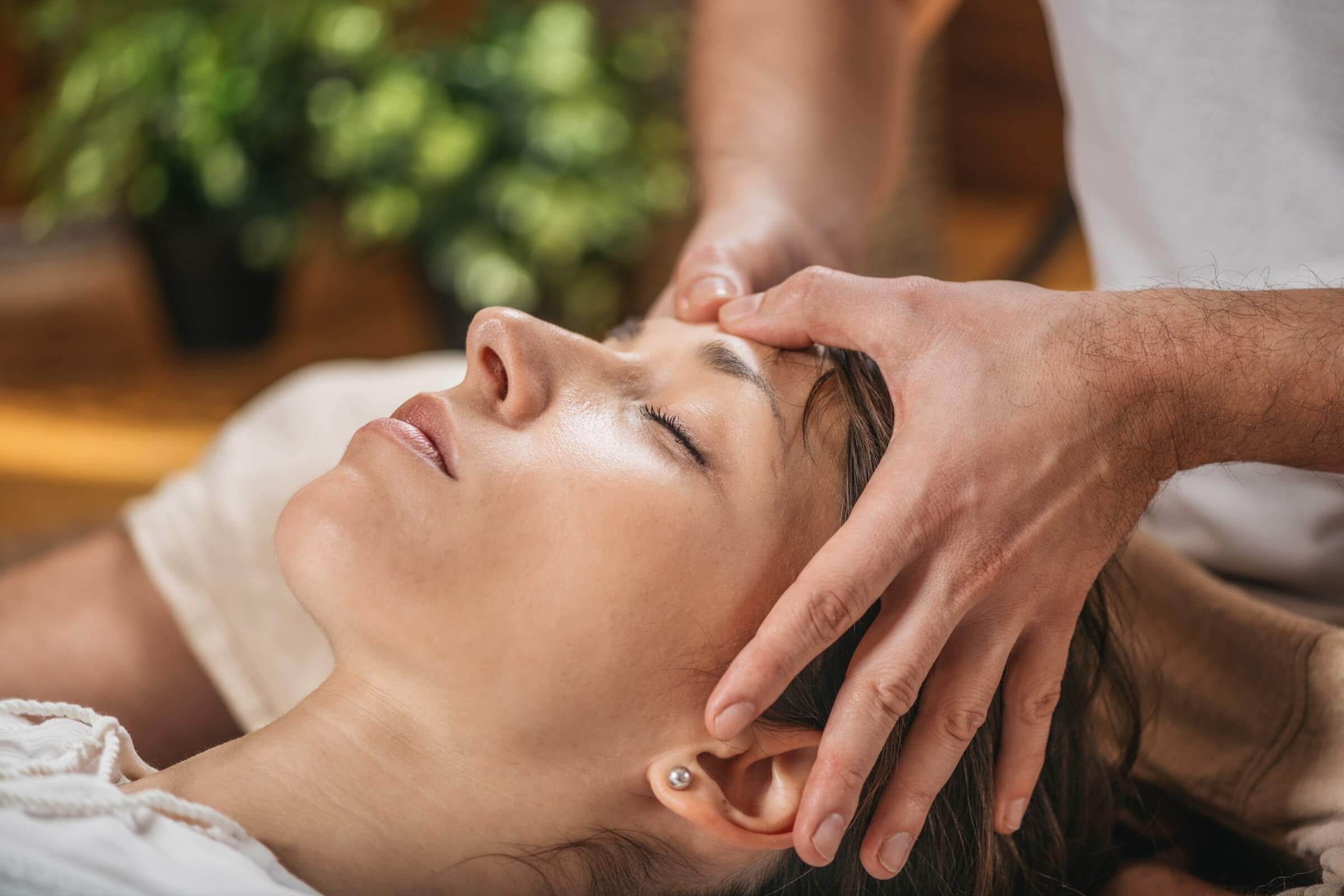
Craniosacral therapy is a gentle manual body therapy that emerged from osteopathy. Therapists feel the craniosacral rhythm between skull and sacrum with fine touches. With gentle impulses, they release tensions, calm the nervous system and support the self-regulation of the body. Craniosacral therapy belongs to the methods of alternative and complementary medicine in Switzerland.
Frequent areas of application of craniosacral therapy
- Stress, exhaustion and burnout support
- Migraine and tension headaches
- Sleep disorders and inner restlessness
- Chronic back and neck pain
- Tinnitus and concentration problems
- Infants and children: colic, crying restlessness, sleep problems
2. What does the insurer pay for craniosacral therapy?
Basic insurance does not cover craniosacral therapy, not even with medical prescription. Craniosacral does not belong to the five legally recognised methods of complementary medicine under Art. 25a KVG. Unlike for osteopathy, there is also no federal professional title for craniosacral therapists in Switzerland. The professional association is called Cranio Suisse.
Important: The cost coverage runs exclusively via an outpatient supplementary insurance under the Insurance Contract Act (VVG). If you plan regular craniosacral sessions, you should take out the supplementary insurance early.
3. Which benefits does the craniosacral supplementary insurance offer?
An outpatient supplementary insurance with complementary medicine coverage covers craniosacral sessions. Insurers cover 70 to 90 percent of the costs per session, provided the therapist is registered in the EMR or ASCA register. EMR stands for Empirical Medicine Register, ASCA for the Swiss Foundation for Complementary Medicine. The status you can check at emr.ch and asca.ch.
Families save several hundred francs per year because both sessions for infants with crying restlessness or sleep problems and treatments for adults with stress-related migraine are covered in the same complementary medicine tariff. Some tariffs limit the cost coverage to a few thousand francs per year; others pay unlimited with a fixed hourly rate. Most providers start without waiting periods. Anyone who combines craniosacral therapy with other gentle methods should check the joint annual limit.
Check craniosacral tariffs for families and adults
How much the insurer covers per session and which annual limit applies for infants and adults differs between providers. Tip: In the Compando comparison, you see premiums, cost coverage and family limit at a glance.
4. How high are the costs of a craniosacral treatment?
A craniosacral session lasts between 45 and 60 minutes. The costs differ by therapist, experience and region:
- First session (60 to 75 minutes): CHF 130 to 180
- Follow-up session (45 to 60 minutes): CHF 110 to 160
- Session for infants (30 to 45 minutes): CHF 90 to 130
The number of sessions differs by complaints. For stress-related complaints, 6 to 10 sessions over three months usually suffice (annual costs CHF 700 to 1'600). Chronic migraine frequently requires 8 to 12 sessions over six months (CHF 900 to 1'920). For infants, 3 to 5 appointments usually suffice (CHF 270 to 650).
Example calculation: A 38-year-old bank employee from the canton of Bern plans, with stress-related migraine, 10 cranio sessions per year at CHF 130. This results in total costs of CHF 1'300. A complementary medicine supplementary insurance covers 80 percent (CHF 1'040). The own share is CHF 260 per year. If his six-month-old daughter needs sessions in parallel, these fall in the family tariff into the joint contingent.
Gentle therapies as a family package. Parents with infants who suffer from crying restlessness or asymmetries often choose craniosacral as the main method and complement with osteopathy for skeletal and joint complaints, acupuncture for their own stress complaints or medical massages for tensions. Within the complementary medicine tariff, all methods share the joint annual limit.
5. When is a craniosacral supplementary insurance worthwhile for families?
Families with infants who suffer from crying restlessness, sleep problems or colic save several hundred francs per year with a policy with craniosacral coverage. Also working professionals with stress-related migraine, pregnant women with pelvic complaints or patients in burnout support usually plan several sessions per half-year and fare significantly cheaper with the suitable tariff.
Check before signing:
Search for cranio therapist in EMR or ASCA register. Membership at Cranio Suisse is a recognition of the professional association, but no criterion for cost coverage. Check the register entry before the first appointment directly with the therapist or via the official lists.
Distinguish limit for infants from adult limit. Some tariffs limit sessions for infants per child and year; others count them in the family overall limit. With several children or planned sibling treatments, a tariff without person splitting pays off.
Compare cost coverage model. Providers cover either a percentage (70 to 90 percent of the costs per session) or a fixed hourly rate. For long-term stress and migraine therapies, the fixed hourly rate frequently calculates better. What is in the tariff, you find in the health insurance comparison.
Disclose pre-existing diagnoses openly. In the application, a health questionnaire takes place. Especially with chronic migraine or tinnitus, transparent information under Art. 6 VVG is mandatory so that the policy is not later contested.
Adapt the craniosacral supplementary insurance to your needs
Families with infants have other requirements than working professionals with migraine. Because premiums and family limits differ, a comparison by number of sessions per person and year pays off.
You might also be interested in

Alternative and Complementary Medicine: What Does the Insurer Pay?
16.02.2026
Osteopathy as Manual Therapy: Which Supplementary Insurance Covers the Sessions?
16.02.2026
Medical Massages: Which Supplementary Insurance Pays Lymphatic Drainage, Sports Massage and Classical Massage?
16.02.2026
Acupuncture and Insurer: When Does the Insurance Pay TCM Treatments?
16.02.2026