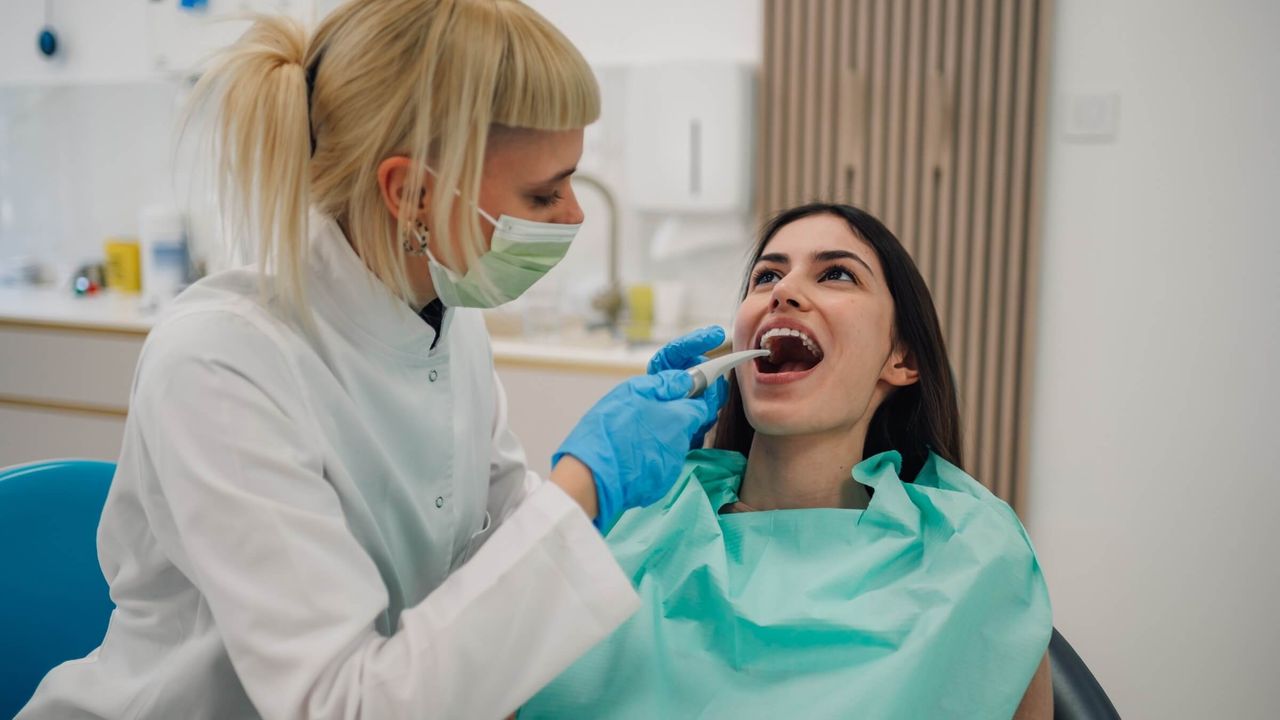
Braces Costs Switzerland: What Does the Insurer Pay?
Braces correct misalignments in children and adults. Compando shows the models, the treatment process and who covers the costs.
- 1
- 2
- 3
- 4
- 5
- 6
- 7
- 8
- 9
1. When do I need braces?
Jaw and tooth misalignments can be corrected with braces. Not every gap and not every slightly crooked tooth requires treatment. Doctors recommend a treatment when the function of the dentition is impaired or endangered in the long term.
Frequent indications for braces:
- Overbite: The upper jaw protrudes too far forward
- Underbite: The lower jaw protrudes
- Cross-bite: Teeth bite past each other laterally
- Crowding: Too little space, teeth are nested
- Spacing: Too much distance between the teeth
At the Federal Statistical Office, it shows: about 28 percent of Swiss people have worn braces once in their life. Among 15- to 24-year-olds, it is even more than every second person. Whether action is necessary in the individual case is clarified by a specialist examination.
2. Braces for children: which are there?
For children, treatment is recommended to begin between 9 and 12 years, with cross-bite already from 4 years. Three models are widespread in practice:
- Removable braces: Removable plastic plate with wires, suitable for light cases and the growth phase.
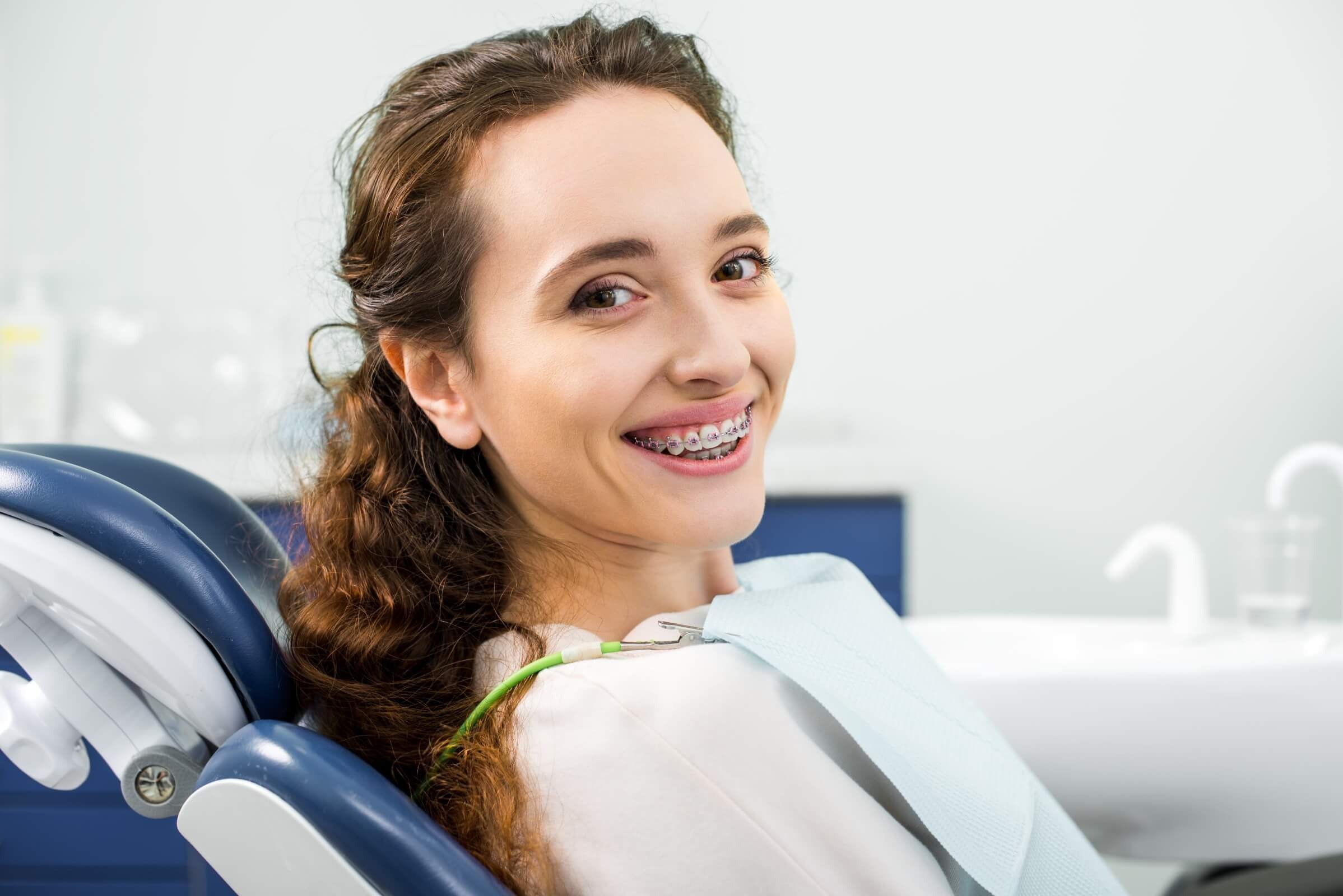
- Fixed braces (brackets): Plates glued onto the teeth with wire arch, for complex misalignments.
- Early treatment: Small devices from 4 years for cross-bite or open bite.
The models of braces differ in visibility, care effort and wearing duration.

3. Braces for adults: which are suitable?
Adults prefer invisible braces.
For fixed braces in adulthood, the lingual technique is suitable. The brackets are not fastened externally but on the tongue side of the teeth and thus remain invisible.
Also aligners, transparent splints, as well as removable braces are preferred by adults. Have your dental practice advise you on treatment options.
4. What complaints can dental correction remedy?
Tooth and jaw misalignments do not only affect locally. Untreated, they can favour a series of further complaints:
- Caries and periodontitis through nested teeth and impeded cleaning
- Stomach and intestinal complaints through problems with biting and chewing
- Swallowing and speech disorders such as lisping
- Breathing problems with retracted lower jaw, often connected with snoring
- Increased mouth breathing and thus higher susceptibility to infection
- Headaches and migraine through tense jaw and neck muscles (craniomandibular dysfunction)
5. Do braces also have side effects?
Dental corrections are medical interventions and can bring side effects. With fixed braces, light tooth pain after installation and after readjustments is normal. They subside after a few days. With removable braces and aligners, the risks are lower because you can continue to care for the teeth normally.
Possible side effects of fixed braces:
- "White spots": Irreversible decalcification spots around the brackets with insufficient hygiene. They count as a precursor to caries.
- Gum inflammation (gingivitis): With lack of cleaning.
- Root resorption: In rare cases shortening of the tooth roots. X-ray controls during treatment are mandatory.
- Irritation of lip and tongue: Through the foreign bodies, with lingual braces additionally speech difficulties in the first weeks.
Regular control appointments and consistent oral hygiene significantly reduce the risks.
6. How long do I need braces?
The treatment duration depends on the extent of the misalignment and on the chosen model. Three reference values for the active phase:
Model | Active phase |
|---|---|
Fixed braces | 12 to 30 months |
Aligner splints | 6 to 18 months |
Removable braces | depending on misalignment |
Complex cases with fixed braces last up to 2.5 years. Aligners are worn 20 to 22 hours per day, removable braces at least 14 hours.
After completion of the active phase, the retention phase follows: a thin lingual retainer on the inside of the front teeth stabilises the result long-term and prevents the teeth from migrating back (relapse).
7. Dentist or orthodontist: what do I have to note?
Orthodontics is a sub-field of dentistry. To become a specialist dentist for orthodontics SSO, after the dental medicine studies a four-year specialist training is necessary. With children and complex cases such as cross-bite, open bite or surgery need, the specialist dental practice is the right contact point.
For aligner treatments in adults: the specialist training does not necessarily cover the topic in depth. Before treatment start, the question of aligner-specific continued training and case numbers pays off.
Good to know: The tax point value is the price factor in the dentist tariff. Social insurance (IV, basic insurance in exceptional cases) bills with tax point value 1.0; in the private area, practices charge values of 1.1 to 1.7. With a CHF 10'000 treatment, the difference can amount to several thousand francs. Clarify before treatment start whether the practice bills at the social insurance tariff (1.0). Many supplementary insurance covers only this tariff.
8. Does the insurer pay costs for braces?
Dental corrections in Switzerland are assigned to three different cost bearers. The insurer pays only in narrowly defined exceptions; in other cases, you bear the costs privately or via supplementary insurance.
Who bears which costs?
Situation | Cost bearer |
|---|---|
Normal misalignment | Private or supplementary insurance |
Severe masticatory system illness | Basic insurance |
Birth defects | Disability insurance |
Accident damage | Accident insurance |
Basic insurance (KVG): The benefits of basic insurance cover braces only in case of severe illnesses of the masticatory system, as a consequence of other illnesses or after accidents. The legal requirements are in Art. 31 KVG. Aesthetic and classical orthodontic corrections do not fall under this.
Disability insurance (IV): For medically recognised birth defects such as cleft lip and palate or Pierre-Robin syndrome, IV covers the treatment costs until completed 20th year of age (Art. 13 IVG). Already initiated treatments are continued beyond this after formal registration and cost commitment.
Important: Missed IV registration deadlines can cause the entitlement to expire. For birth defects, CHF 10'000 to 20'000 then fall privately. With severe diagnoses, clarify the situation immediately with the practice and the Information Centre AHV/IV.
Dental supplementary insurance: For classical dental correction, the dental supplementary insurance is the central cost bearer. Per tariff, supplementary insurance covers 50 to 90 percent of the costs, with maximum amounts between CHF 5'000 and 15'000 per treatment case. Prerequisite is conclusion before the diagnosis and observance of the waiting period of 12 to 36 months for orthodontics. With documented misalignments, the insurer can set a policy restriction.
Compare dental supplementary insurance with orthodontics coverage
Degrees of coverage and annual limits differ between providers by several thousand francs per treatment. Compare dental supplementary insurance before the medical diagnosis. This way you keep the full coverage.
9. How much do braces cost in Switzerland?
The prices for braces move between CHF 3'000 and 18'000 per treatment. Most treatments lie in the range CHF 6'000 to 12'000. The exact amount depends on the chosen model, the treatment duration and the severity of the misalignment.
Reference values per treatment:
Model | Costs and duration |
|---|---|
Removable braces | CHF 3'000–7'000 (12–24 months) |
Aligner splints | CHF 5'000–10'000 (6–18 months) |
Fixed braces | CHF 6'000–13'000 (12–30 months) |
Ceramic brackets | CHF 8'000–14'000 (18–30 months) |
Lingual braces | CHF 10'000–18'000 (18–30 months) |
Costs children and adolescents: Treatments lie between CHF 3'000 and 12'000 because the jaw is still growing and simpler models suffice. With several children, families benefit from family discounts. Many providers grant 5 to 10 percent from the second child, from the third child up to 25 percent.
Costs adults: Lie between CHF 5'000 and 18'000, especially with invisible models such as aligners or lingual braces. The desire for aesthetics drives the price up.
Follow-up costs: Added are costs for the retainer (stabilisation wire after the treatment, CHF 300 to 800 per jaw) and any bracket repairs (CHF 50 to 150 per piece).
Example calculation: A family takes out a dental supplementary insurance for CHF 25 per month for their child already at the prenatal registration. Eight years later, the child needs fixed braces for CHF 9'000. A comfort tariff covers up to CHF 8'000. After deduction of the premiums (CHF 2'400 over eight years), the family saves around CHF 5'600.
Check before signing:
- Conclusion time: Conclude before the medical diagnosis, best in early childhood.
- Waiting period: Orthodontics 12 to 36 months. Conclude early.
- Maximum amount: CHF 5'000 to 15'000 per treatment case. Check degree of coverage and annual limit.
Compare dental supplementary insurance by need
Families, adolescents and adults have different needs in dental care. Because premiums and benefits differ between providers, a comparison by benefits package and age pays off.