Braces Types Compared: Which Suits?
Brackets, lingual technique or aligners: Which braces fit you? Compando compares the models with their advantages and disadvantages.


- 1
- 2
- 3
- 4
- 5
- 6
- 7
- 8
- 9
1. Which braces do you need?
Braces correct jaw and tooth positions. Which model is suitable depends on the extent of the misalignment and on the aesthetic demand. The choice is based on a dental examination. You receive an individual treatment proposal for this.
For some models, you choose additional options such as bracket material (metal or ceramic) or with children also colours. The next sections show the individual models in detail.
2. What are external fixed braces with brackets?
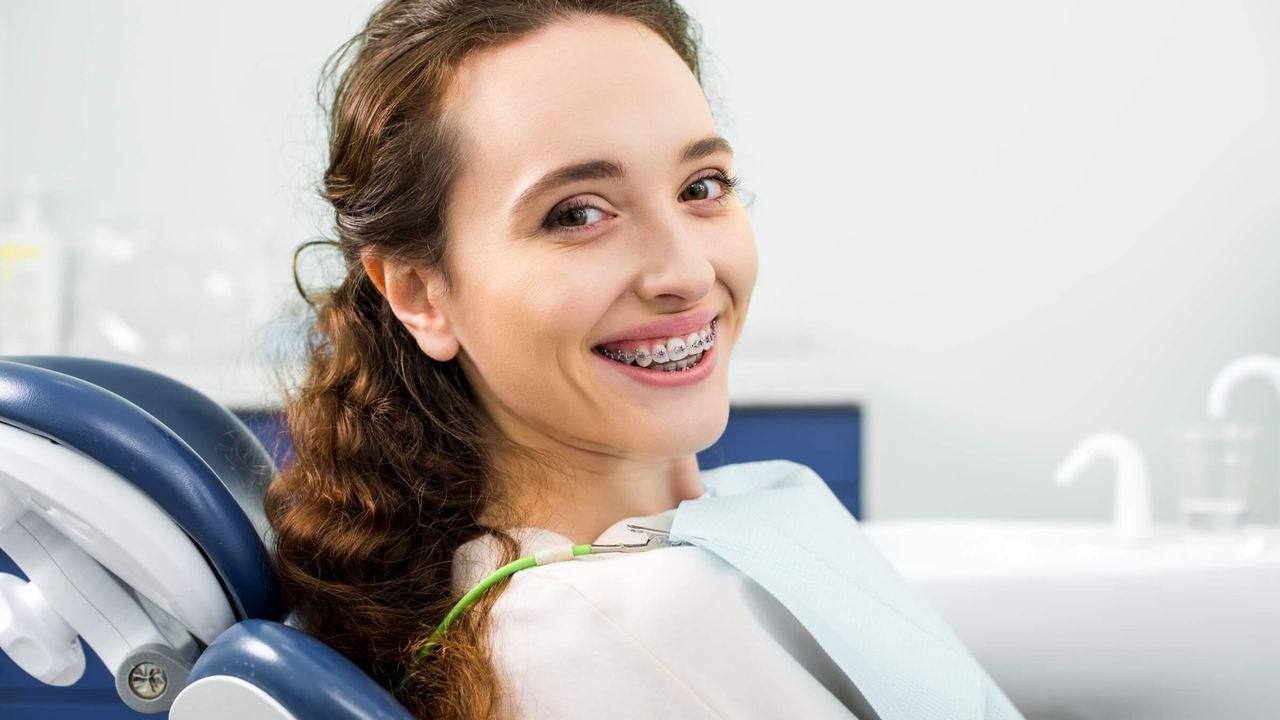
For external fixed braces, small plates (so-called brackets of metal or ceramic) are glued onto the front of the teeth. Wires and partly elastic bands connect the brackets and exert pressure that brings the teeth gradually into the desired position. The tension is readjusted about monthly.
The fixed braces are particularly suitable for the correction of pronounced tooth misalignments. They are well combinable with headgear if jaw misalignments additionally need to be corrected.
Advantages of the fixed braces (external):
- Works for practically every form of tooth misalignment
- Allows fine corrections through monthly readjustments
- Treatment result is very well predictable
- Chewing and speaking remain unrestricted
Disadvantages of the fixed braces (external):
- Pressure pain in the first days after installation and readjustment
- Teeth are harder to clean, higher caries risk
- Care of the braces themselves costs additional time
- Brackets are visible (ceramic variants are less conspicuous, but more expensive)
Average wearing duration: 12 to 24 months Target group: Children, adolescents and adults
3. Lingual technique: What are internal fixed braces with brackets?
For lingual technique, brackets and wires are fastened on the inside of the teeth. This makes the adjustment and readjustment somewhat more elaborate than with external braces.
You choose the lingual technique if a pronounced tooth misalignment exists and you simultaneously wish an invisible solution. This is particularly relevant in professions with customer contact.
Advantages of lingual braces:
- Completely invisible from outside
- Suitable also for larger tooth misalignments
- Fine corrections via regular readjustments
- Treatment result is very well predictable
Disadvantages of lingual braces:
- Pressure pain after installation and readjustment
- Higher costs than external braces
- Tongue irritation in the first weeks
- Cleaning of the teeth is more demanding
- Temporary speech difficulties when getting used to it
Average wearing duration: 12 to 24 months (depending on the degree of misalignment) Target group: Adults, less frequently adolescents
4. Transparent braces: What advantages do aligners have?
Aligners are removable, transparent splints of plastic (known brand products are Invisalign and SPARK). With 3D planning, the dental practice determines the desired tooth position and calculates the fits of a whole splint series. With every new splint, the teeth move one step closer to the final position.
A splint is worn for about two weeks. Then the next follows. For eating and brushing teeth, you remove the aligners. Brush your teeth after every meal; otherwise bacteria nest in the splint.
Aligners are suitable for the correction of tooth misalignments, but not for jaw misalignments. They only work in light to medium cases.
Advantages of aligners:
- Almost invisible in everyday life
- Speaking remains unrestricted
- Removable before eating and brushing teeth
- Cleaning of the teeth as usual possible
Disadvantages of aligners:
- Only sufficient for light to medium corrections
- Success stands and falls with wearing time (at least 22 hours daily)
- Chewing gum during treatment taboo
- Splints can be forgotten or lost
Average wearing duration: 6 to 18 months Target group: Adults and adolescents
Compando tip: Aligner treatment requires specific continued training. Clarify before treatment start whether the practice can show aligner case numbers. Direct-to-consumer offers without regular medical control bear a higher risk for undesired tooth movements or absent treatment success.
5. Who are removable braces for?
Removable braces consist of a plastic plate with small springs or screws and a wire. They are individually manufactured and worn during sleep as well as during the day for about six hours. Correction elements are regularly adjusted in the dental practice.
Good to know: By function, there are five subtypes of removable braces. Space maintainers keep the tooth position in children after milk tooth loss. Active plates expand the jaw. Activators work via facial, mouth and jaw muscles. Bionators work only through chewing pressure (without wires). Biognathors are made so that they are hardly visible during wearing and speaking.
Advantages of removable braces:
- Removable before eating and brushing teeth
- Gentle for teeth and gums
- Cleaning of the teeth as usual
Disadvantages of removable braces:
- Swallowing and speaking are unusual during wearing
- Success depends directly on wearing time (at least 16 hours daily)
- Braces themselves must be cleaned separately
- Braces can be forgotten or misplaced
Average wearing duration: depending on misalignment and therapy course Target group: Children, adolescents and partly adults
Check dental supplementary insurance before diagnosis
Per method and treatment duration, several thousand francs of own costs arise. Therefore compare dental supplementary insurance before the medical diagnosis. This way you keep the full coverage.
6. What does headgear bring?
The headgear (also called facebow) is usually used in combination with fixed braces. It helps move the molars backward. This gives the other teeth (such as the incisors) more space for their function.
The headgear is fastened to the neck and/or head and connected to the braces in the mouth. Usually it suffices to wear the headgear at night.
7. Is surgical correction an alternative?
With fully grown bones and large jaw misalignments, braces reach their limits. In such cases, a surgical correction comes into question. Surgical interventions on the jaw are performed by oral and maxillofacial surgery.
Before an intervention, pre-treatment with braces usually takes place; afterwards the surgery follows, and after that the braces come into use again for fine adjustment.
8. Which braces are there for adults?
Adults can also suffer from tooth misalignments and have them corrected. The treatment requires besides the costs also patience because the fully grown jaw reacts more slowly than in children. To improve the adult dentition, both fixed and removable braces are used. Frequently, inconspicuous customisations are preferred.
Have your dental practice advise you on suitable treatment options. Anyone who wants to finance the treatment via a dental supplementary insurance checks in advance the waiting periods and maximum amounts. How high the costs of the chosen braces turn out depends on the model and on the treatment effort.
9. Does the insurer pay for braces?
Mandatory basic insurance covers dental corrections only with serious illnesses or birth defects. Classical corrections of tooth position are not covered. You finance them privately or via private supplementary insurance. Important is the time: before the medical diagnosis and with observance of the waiting period of 12 to 36 months.
Compare dental supplementary insurance by need
Families, adolescents and adults have different needs in dental care. Because premiums and benefits differ between providers, a comparison by benefits package and age pays off.